

interview:lola bates
Lola Bates has spent years being the most talented person in someone else's story. Now she is writing her own. Raised in Laurel Canyon, shaped by Joni Mitchell and Kate Bush and PJ Harvey, Bates arrives in 2026 as a composer, multi instrumentalist, vocal arranger and visual director with a debut album built around a single idea: that love and power are not opposites. They never were. We sat down with Lola to find out what it really took to get here.
Interview by VICTORIA ENCONTRA
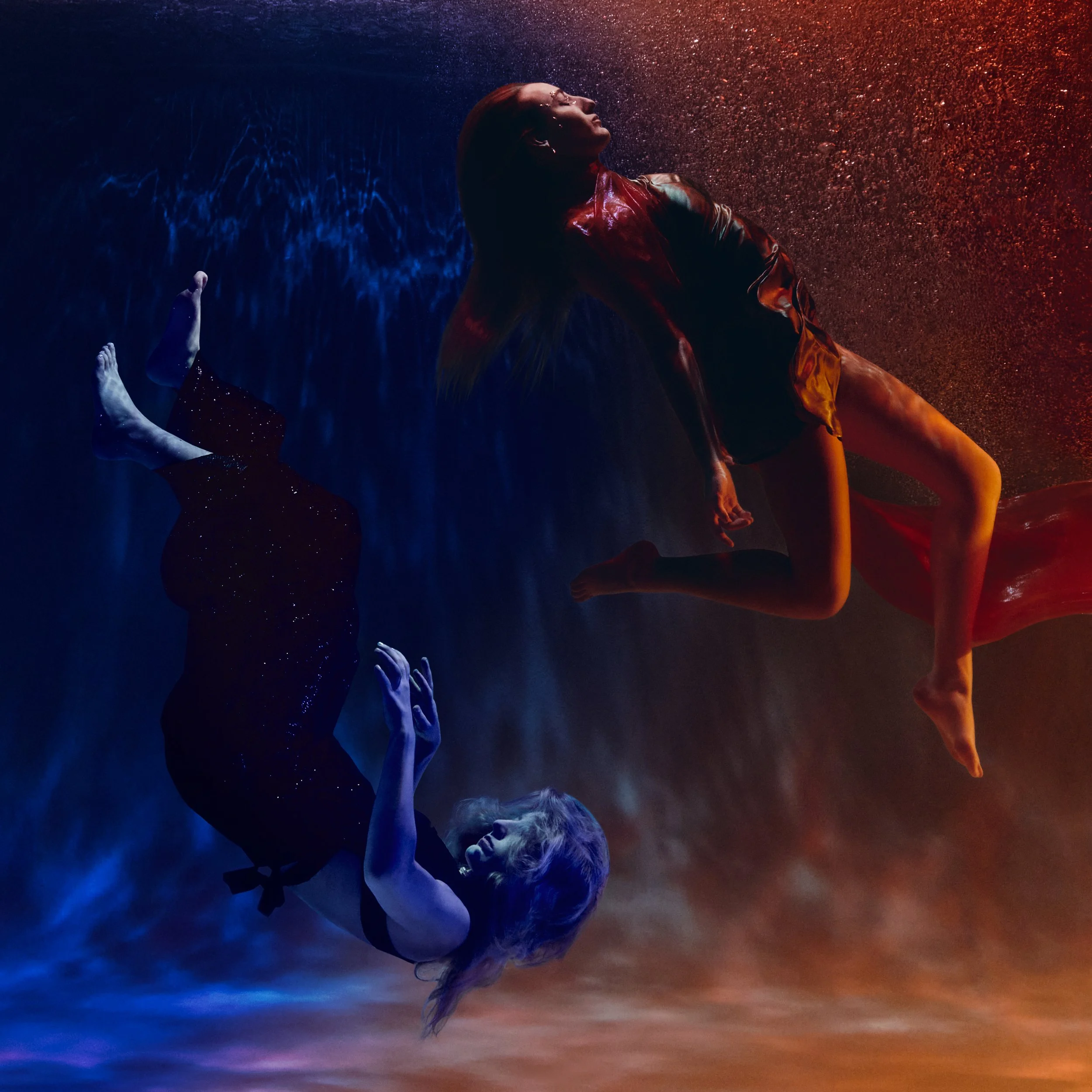
Your debut album Love and Power puts two ideas side by side that don’t always
go together. When did you first realise that love itself can be a form of power —
or that power can show up through love?
The moment I started taking agency—of the relationships I nurtured, the discipline I built in my work/art, the romantic entanglements I walked away from, and learning to sit in stillness with myself - each an act of love. That's when it became clear to me that love, especially the kind you turn towards yourself, is one of the truest forms of power there is.
You’ve spoken about this record as a journey towards inner strength. What’s
one belief you had to let go of for that journey to really begin?
The belief that strength and inner power can be acquired overnight. As much of a go-getter as I am, I am no different from any other human being. Part of me wanted to rush this album into the hands of listeners at the start of 2025 — but I hadn't yet discovered my message. The more I pondered and grew into it, the more it poured through my musical and vocal performances. The more it developed visually, through photographs and music videos. The more I allowed my inner power to grow slowly and steadily, the more it permeated every facet of both the record and my artistry.
If the album were a film told in three acts, what’s the opening scene, the
turning point, and the final shot? (You’re very cinematic — lean into it.)
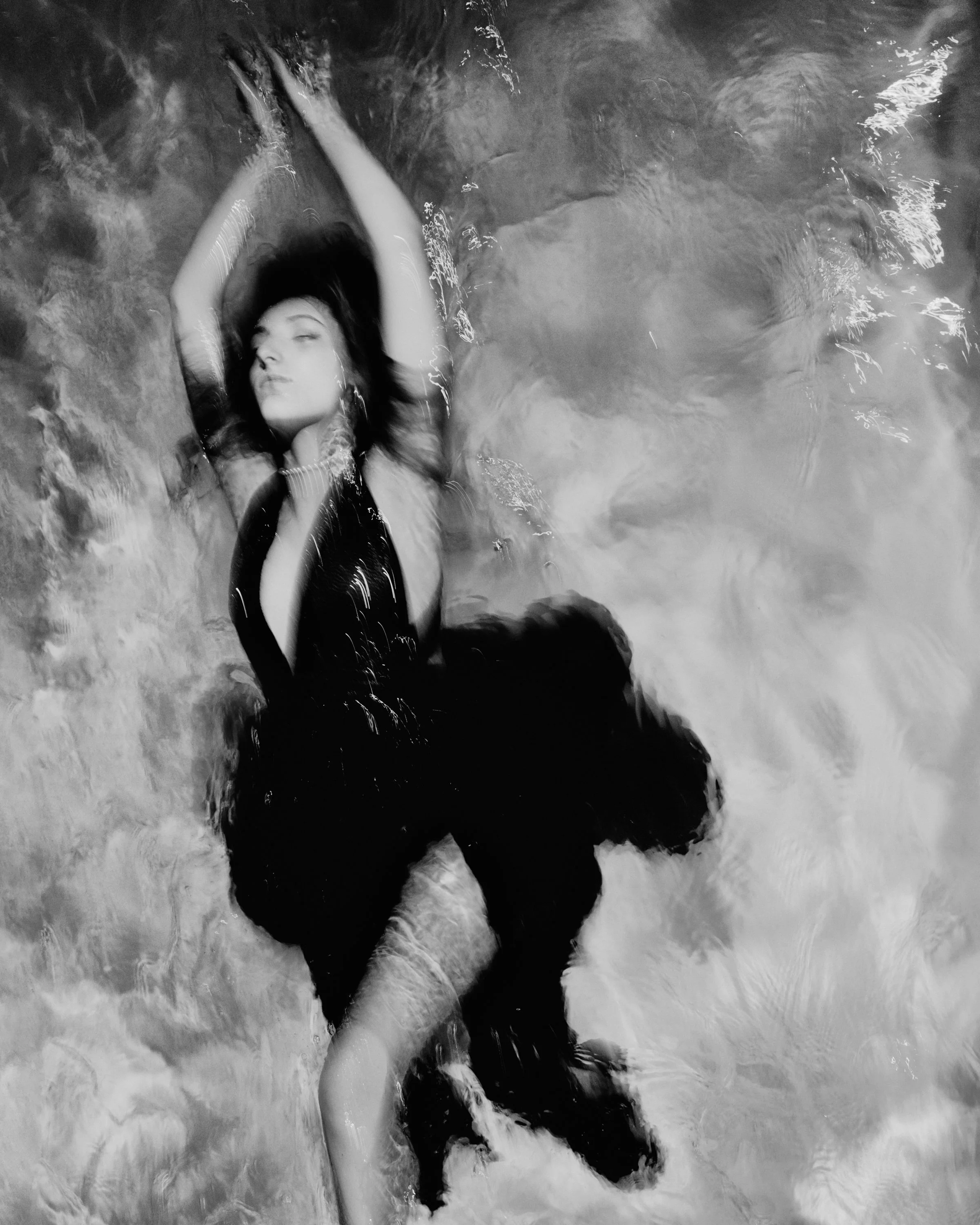
Similar to the allegory of the Cave.
Scene 1: A beautiful, naive and ignorant girl is swallowed by darkness, untouched and unaware of what waits within.
Scene 2: She moves through the shadows, entwined with faceless lovers and surrendering to desire, romance, and temptation.
Scene 3: She breaks the surface, rising from the depths into blinding light, reborn and electric with a power she never knew she carried.
What’s a lyric on “Girl’s Girl” that still makes you go “oof”… even now?
“Time will tell, when the keeper releases the dog in its cage
And I will be gone, away from the scene, keeping my body clean”
This lyric shows the first bit of awareness I felt in processing the situation behind the lyrics to ‘Girl’s Girl.’ In writing this lyric I promised myself that I would get safe, stay away and keep my body clean - that I wanted to take accountability of my actions and not be caught up in the fire. I wanted to do so in order to respect another woman, to be a girl’s girl.
The concept of being a “girl’s girl” carries a lot of cultural baggage. What do people get wrong about that phrase — and what do you wish it actually meant?
I feel like some people equate ‘girl’s girl’ with ‘people pleaser.’ The term ‘girl’s girl’ doesn’t define someone who would give everything up for their girlfriends, who would drain their energy for their girlfriends, or who get stuck in a constant state of give and no take. To me being a ‘girl’s girl’ means having respect for your fellow sisters, being aware of their feelings and how you make them feel, making decisions based out of respect for them, to lift them up in times of need, to support their dreams and endeavors, and to also let them take care of you in your own times of need.
You’ve described “Madonna Gold” as navigating blurred lines around intimacy in a very modern way. What’s the most unexpected thing you learned about yourself while writing it?
The most unexpected thing I learned about myself while writing the song ‘Madonna Gold’ is no matter how deeply I explore my sexuality, no matter how swayed I might be by temptation, no matter my loss of innocence, I always have guiding strength within myself that leaves me pure, untainted, and golden. The love and respect I have for myself runs deeper than anything a sexual experience could define me by.
What’s a sound on the album that took forever to get right, and what finally unlocked it?
The drop in dynamics in the bridge section of 'Power' was extremely hard to nail, mix-wise. All the parts were there, but I wanted it to feel as if the vocals, synths, and strings were emerging from darkness — from a dreamworld — right after the hard stop of the chorus before it. I felt that breaking it down this way helped the bridge build in a magical way. It was a lot of pulling levels down, removing sounds that crowded the space, and then adding them back in as the bridge grew. What actually unlocked the solution was revisiting the very first demo of the song, one I had created a year before, and taking a cue from my initial instincts.
When you’re building those lush vocal arrangements, are you thinking more technical (chords/voice-leading) or with an emotional side (characters/conversation) ?
I definitely approach my vocal arrangements emotionally. If a lyric feels like it's building from a bridge into a chorus, it might call for a crescendo cluster underneath to really propel it forward. While I have an extensive knowledge of music theory, I really just sing what sounds right to me - based on feel.
You’ve collaborated with Maxwell Joseph and engineer Robert Carranza, what do they pull out of you creatively that you don’t access alone?
I am so stoked that Maxwell and I began collaborating full time on this record. When songwriting I can at times lean toward a classic, traditional pop sound, but he always brings a modern twist that elevates my songs not only to their potential, but to a place that feels current and culturally relevant. And to say I am lucky to work with Robert Carranza would be an understatement. With 30+ years of production and engineering experience, and countless stories of album-making, Robert knows exactly how to nail my sound. He brings out the cinematic elements, adds clarity to all the little detailed ear-worms woven throughout my songs, and most importantly, makes my voice sound smooth as hell. The album would not have come alive without these two supportive gents!
You’ve said your musical roots connect to nature, vinyl, and that Laurel Canyon lineage. What’s one part of that process you happily embrace and one part you actively push back?
I absolutely embrace the retreat into nature. The mountains fuel my creativity, the beach takes a load off, the sun gives me energy, the smell of Lavender practically writes my guitar lines. I guess the one thing I push back on is identity-wise I don’t consider myself a hippie, nor a Hollywood vampire, nor a renegade, nor an eccentric, nor a Flower Child stuck in time—I let my identity flow between the different cultural backgrounds of the canyon while staying rooted in who I am.
You cite icons like Joni Mitchell, Kate Bush, PJ Harvey, Tori Amos. What did each of them teach you that you couldn’t have learned from “technical” training?
To sing naturally and authentically. To let my body make the sounds it wants to make. I love vocalists who are immediately recognizable by their inflections and tone — and through years of crafting my voice and taking cues from these artists, I feel my voice, too, has become something authentic and unique.
If you had to pinpoint the most “Laurel Canyon” sound on the album — what would that be?
Definitely the track 'Two Pretty Dolls.' I wrote it in the Santa Monica Mountains. It has that timeless Joni Mitchell, Crosby, Stills & Nash feel to it, and really plays with metaphors drawn from nature. Acoustic guitar and lush harmonies throughout!
QuickFire Questions:
The most unhinged voice memo title in your phone?
VEGEMITE SANDWICH
A lyric you didn’t write that you wish you did?
“You want love You don’t know what it is, All you know is that you meet someone and then they take you home
You want love But it’s love that you’re afraid of, Did you think that you were made of stone and find out you were wrong?”
‘You Want Love’ by my friend,
James Hall of Pleasure Club
If your album were a tarot card, which one is it — and why?
I would say The Fool. This album symbolizes a new beginning for me, and a leap of faith into discovering my sound and message.
Headphones on or speakers loud?
Speakers loud—always
Lyrics first or sound first?
Both
Fill in the blanks:
love feels ______, power feels ______
people might think lola bates is ______, but lola bates is actually _____
Love feels like an extension of who I am right now.
Power feels resurgent right now.
People might think Lola Bates is divine feminine, but Lola Bates is actually a massive music nerd.