
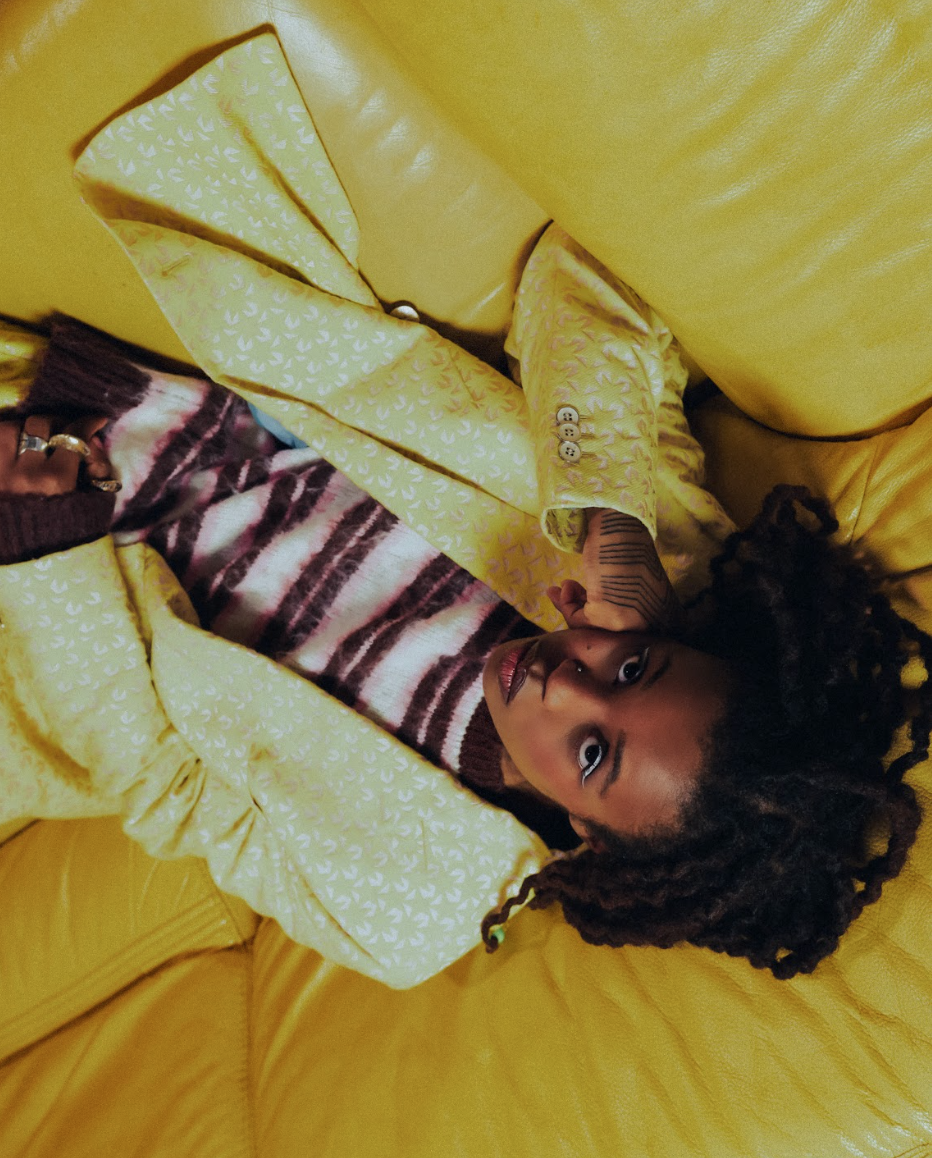
INTRODUCING: LADY DONLI
Gracey Mae sits down with Lady Donli, to discuss her new music, Pan African Rockstar, her independence as an artist and unique sound. What inspires her, plus whats next!
Interviewer- GRACEY MAE
Hi Lady Donli. How are you? Welcome to Tirade. I'm good. How are you?
I'm very good. Congratulations on your brand new project: Pan African Rockstar. For our readers that haven't listened yet, what can they expect?
You can expect a mix and match of different experiences. When people think about me, they think about the fact that I'm Nigerian and the first thing you think of, “Is this an Afrobeats album?” I suppose it does have influences from Afrobeats because of where I'm from, but there's also rock in the music, there's also R&B. It really is a place where genres have come to dance! I guess they should expect a sonically good experience.

I definitely hear that! First on the album is ‘NUMBER 1 MOTHERF*CKER’, it has rock drum patterns, but it also starts with a Fuji intro with the crowd vocals. ‘Your Fantasy’ has a lot of rock guitar and a few chimes with some rap. On Apple Music, your music is categorised under “Alternative”. How would you describe your sound?
I honestly, I would call it alternative to everything. Reason being, I literally make rap music, I make rock music, I make Afrobeats, I make pop. I want to be able to touch on different experiences and different sides of my identity. I hate the idea that “this is a Black African artist so she has to make this specific type of Afro Pop”. I just love music. I love listening to it. I love making it. So I tried to make sure that I touch on all the things I really like. I started out rapping when I was little so I think a lot of my influences have come as a result of the rap patterns. If you notice in my music, it's like I'm singing but it's also like really mellow and that's just because I really tried to like make the rhythmic structures as similar to rap as possible. There's this simplicity in rap that I really love. So as I said, it's just a melting pot of different experiences. I'm Nigerian but I was born in The States, I've lived in England, I've lived in Toronto, I've lived in so many different cities and those cities have influenced what I've become. A lot of those drum patterns I got from traditional Nigerian drum frameworks. The chanting is very much an African thing. A lot of my hooks are based on chanting, you can sing it over and over again. It's big. It's like a choir and that's because of the chants in the churches.
You touched on Toronto, that’s where you spent lockdown right? How was that?
Oh…it was good and bad, in the sense that when I was locked down in Toronto, it was right after I had dropped my debut album so I was meant to be on tour. I was really operating on a high and it really destroyed my confidence because it was meant to be my moment finally, and I didn't get to have that. So I guess at that point, it was really, really sad. On the bright side, I really took time to learn to know myself because I had been doing so much travelling for the previous two years. That was the first time I got to like really sit down so I guess in that way, it was bittersweet. It also really allowed me to build a community and it was where I first started working on the album. That was where I first made, ‘Hello Lady’ and ’The Bad Ones’. Being in Toronto for that period of time really gave me space to understand where I was trying to be in the next steps of my career sonically but it was also a downer because I was going from feeling on top of the world… Lagos in December, doing two three shows every day…to just having that quietness and having to cancel my first proper tour. So bittersweet, for sure.
At the start of Pan African Rockstar, you say “E no easy, e not easy at all”. When you are feeling low, how do you pick yourself up?
Honestly, I write my way into feeling confident. A lot of the music on Pan African Rockstar is about building confidence. If you listen carefully, I had to big myself up, or say “I got this”, it's like a pat on the back. Also like, I don't try to be too optimistic; sometimes it's okay to be down. It's natural human emotion. Some days I'm up, some days I'm down. That cycle is what helps me write good music. That cycle is what keeps my humanity. It's okay to be down, just don't stay here. That's kind of how I rationale my life. It's up, it’s down, comme ci, comme ça. I just keep on moving.
Take a minute to write an introduction that is short, sweet, and to the point.
Feeling the emotion and sitting in it is so important but it can be super overwhelming. Track seven on the project is ‘Comme Ci, Comme Ça’. Given that you lived in Toronto, do you speak French at all?
Just a little bit. Actually, I lived in Paris because I was doing an artist's residency for three months from April to July. Before then, I was taking French classes in Lagos for two months. So when I was in Paris, I just was falling in love with the city, I thought to myself, “how can I kind of capture this moment in time?” One of my favourite expressions is “comme ci, comme ça”. I love that you have a phrase where they can ask you “how you are?” and you're just like, “comme ci, comme ça”, and that's kind of how I felt. Paris really showed me a lot of love while I was out there. It really instilled a lot more confidence in me, in my skill set as an artist and also in my personality, because I'm super introverted. I guess it made me see that there's not necessarily anything wrong with that. I was able to navigate better than I thought I would have been able to, because of the language barrier. So it really helped my confidence. It gave me a little more swag, the city, the people that was I meeting, the community that I was becoming a part of. I really wanted to capture that moment in time and that's how come see ‘Comme Ci, Comme Ça’ happened.

How do you prepare for a residency and how is it different from doing a summer of touring?
This specific residency was a bit different because it wasn't necessarily for singing or performing. It was more so about creating and networking. As I said, I'm an introvert, so I'm more likely the kind of person that wants to stay in their house. I told myself when I was going to Paris that anytime somebody calls me to go outside, I'm gonna go I was meeting people I wouldn't have met, I was getting into spaces, creating, I was really pushing myself out of my comfort zone, and I'm better because of it. I think for me now, my idea is, whenever I'm in a new space, I really just want to push myself out of my comfort zone. I would do what I wouldn't necessarily do; going out every day, going to places I wouldn't, talking to more people, being another version of myself. When I allow myself to be other versions of myself, then I'm able to see more, feel more, understand more. That's kind of like how I approached this specific creative residency.
“I don't think it's something I want them to know but I guess it's something I want to tell them. I don't know if you would paraphrase this because I'm about to curse. But it's just like…”You're the number one motherfucker. You're on top of it and you got this”. That's my mantra. I just really want people to take that away from this interview. They are who they say they are. If you're that bitch, you’re that bitch. If you're that guy, you’re that guy. People can say it's narcissistic but as long as it's not dangerous to any other person, do your thing. Confidently fail, then learn and get back up. That's just the energy of the Pan African rock star, everyone can be a Pan African Rockstar”

This industry is always out of sight, out of mind- so this approach is A1. You spoke about starting off as a rapper, but a little birdie told me that you actually started off doing poetry, and that your dad still has a few of your poems archived, is that the case?
Let give me you an applause because you're going in! So basically, I'm the last child. I have five siblings. Growing up my brothers, they used to rap, they had a little studio. I was just so intrigued. They were my senior brothers so you look at them like little gods when you're young. The way they handled swag, they were so cool. They would come home with their cassettes, and at that point, I was really getting into poetry, finding my own voice. Then I was like, “Oh wow, my brothers are rapping. Poetry seems sort of like rap”. My dad is a sweetheart, he just keeps everything. It's wonderful to be in a space where I've always felt like my creative ambition was supported. Throughout secondary school, I was the captain of the Poetry Club. Then when I was in high school, I figured that I knew how to sing. I was like, “I have an unconventional voice, but it has something going on”. I just tried to combine both of these things that I rea
Talk to us about growing up in Abuja, the Federal Capital of Nigeria. Do you feel like it influenced your sound?
So Abuja is very different from Lagos. In Abuja, everybody likes rap. It has a rapping community, the North in general, we love rap out there. I don't know what the phenomenon is but it's very rap-centric. I think growing up a lot of what I was seeing was rap music, which influenced me into wanting to be a rapper. The problem with growing up in Abuja is also that it's a very conservative city because it's closer to the north. I, myself, am Hausa, so I come from a relatively conservative home in the sense, where you go to Lagos and entertainment is in their blood; going to parties every other weekend or owambe culture. I didn't go to a concert till I was doing A levels in the UK. I was guarded, my family was also guarded of me, as the last child/last girl. Abuja didn't just have much going on, we would have like one concert a year, that's how different it was. So I think Abuja definitely plays into my personality because I'm very easygoing. I think that's how the city is. People come and say, “It's so boring. It's so slow”. I love it. It matches my personality. I just feel ease when I'm there. I think the good part of it is that when I'm in Lagos, I'm really not doing gra gra with anybody. I'm not dragging anything. I don't have energy like that, I'm going to my house. I guess, I don't have as much hustle. I want to have it but not the way those guys do it. I think it just allows my music to be more free flowing. Also, I'm coming from a place where there isn't as much people trying to make it. I feel like I have to carry my city on my back. I guess that comes with more pressure; despite the odds, there's no industry really in Abuja so I've left Abuja moved to Lagos. I'm searching for this dream and I'm really trying to give my all. I don't like Legos. In fact, I'm running away actively. I haven't been in my apartment since April. I'm really involved but I'm so tired. That's the difference. I think Abuja definitely has made me feel a little bit of an outcast in some ways, because I go to spaces where everyone met in secondary school, especially in the industry. I do feel that presence of being an outsider, lots of times for sure.
